Ask freedivers where to train and many will answer with one word: Dahab. Deep water just metres from the shore, warm and usually calm seas, clear visibility and a town full of freediving schools have made this small Sinai resort one of the best-known freediving destinations in the world. This guide explains why, where people dive, how courses work and how to stay safe.
Book your course with us: Dahab Safari organises freediving courses in Dahab with certified instructors, from first-time beginner courses upwards — together with your transfers, snorkeling days and desert trips around your training. Contact us with your dates and level for availability and prices.
Freediving in Dahab at a Glance
| Details | |
|---|---|
| Main site | The Blue Hole, about 8 km north of town |
| Why it works | Very deep water right off the reef, no boat needed |
| Water temperature | Roughly 21 °C in late winter to 28 °C in late summer |
| Season | All year; many freedivers prefer spring and autumn |
| Courses | Beginner to instructor level with international agencies (e.g. AIDA, Molchanovs, SSI, PADI) |
| Beginner course | Usually 2–4 days including pool or shallow sessions and open-water dives |
Why Dahab Is a Freediving Capital
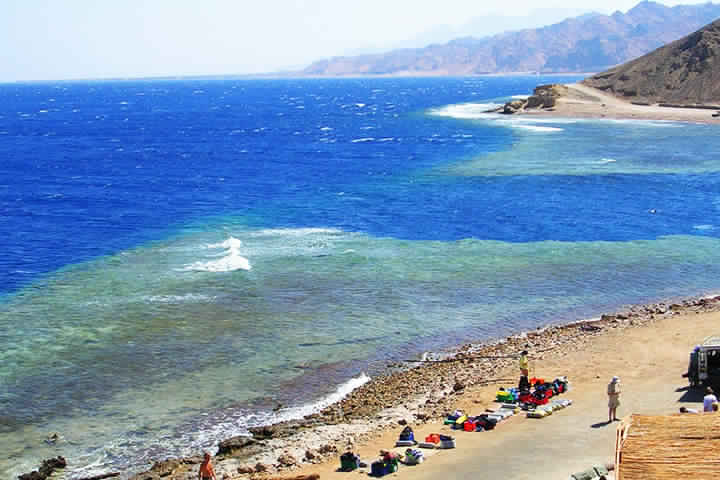
- Depth from the shore. At the Blue Hole the reef opens onto a sinkhole more than 100 metres deep, so you can reach real depth by swimming a few metres from the beach.
- Calm, warm water. The sheltered sinkhole is often calm even when the wind blows, and the Red Sea stays warm enough to train all year.
- A community. Dozens of schools, instructors and long-term freedivers live here; you can find training partners easily.
- Simple, affordable life. Cheap accommodation, good food and a relaxed town make long training stays easy.
Where Freedivers Train
The Blue Hole is the main training spot. Schools set up buoys and lines in the sinkhole for depth training. The famous Arch — a tunnel to the open sea at around 55 metres — is attempted only by experienced, highly trained freedivers with full safety support.
Lighthouse and the town reefs are used for shallow sessions, static and dynamic training and confined-water practice. The Three Pools south of town offer calm shallow water popular for relaxing and for snorkeling days between training.
How a Beginner Course Works
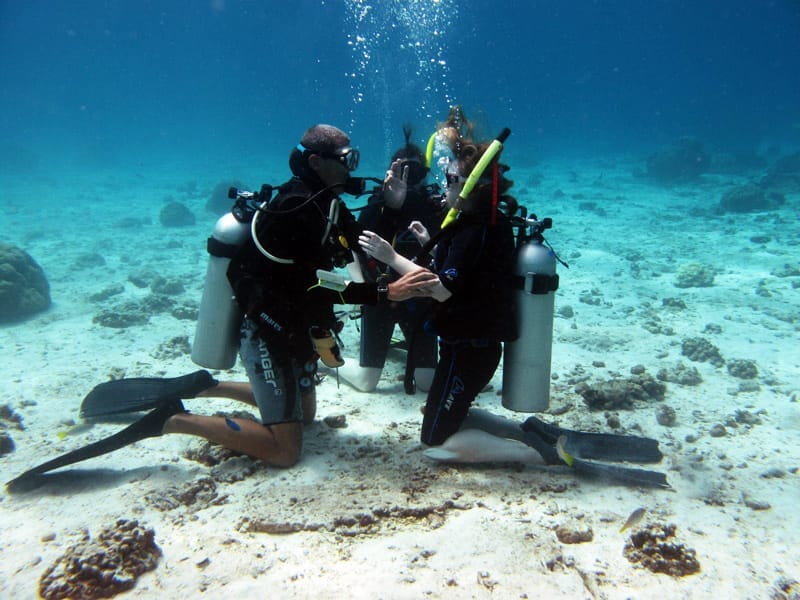
- Theory — physiology, breathing, equalisation and, above all, safety and rescue.
- Breath-hold training (static apnea) in shallow water or a pool.
- Open-water sessions on a line, learning duck dives, equalisation and buddy safety.
- Certification once you meet the depth and time requirements of the course.
Beginners typically reach depths of 10 to 20 metres on their first course, depending on the agency and level. Ask us which course level suits you before you book — we will match you with the right instructor.
Safety First
- Never freedive alone. Always dive with a trained buddy who watches you from the surface — one up, one down.
- Do not hyperventilate before a dive; it increases the risk of blackout.
- Learn with a certified instructor before attempting depth.
- Do not fly within 24 hours after deep or repetitive freediving, and allow time between freediving and scuba.
- Get insurance that covers freediving.
Read our Dahab safety guide for more on sea and desert safety.
Rest Days: What Else to Do
Most freedivers train for a few hours and spend the rest of the day relaxing. On rest days, try a Bedouin dinner in the desert, a stargazing night, or the Blue Hole, Ras Abu Galum and Blue Lagoon day by camel and boat. If you prefer scuba, see our guide to diving in Dahab.
Tip: Avoid climbing Mount Sinai at night just before a training day — the lack of sleep and the altitude are not ideal for breath-hold diving.
Frequently Asked Questions
Why is Dahab good for freediving?
Because the Blue Hole offers more than 100 metres of depth a short swim from the shore, the water is warm and often calm, and the town has a large freediving community and many schools.
How long is a beginner freediving course in Dahab?
Usually 2 to 4 days, combining theory, breath-hold training and open-water sessions.
Can complete beginners learn to freedive in Dahab?
Yes. Many people take their first course in Dahab. You need to be comfortable in the water and in good health.
What is the best time of year?
Freediving is possible all year. Spring and autumn combine warm water with pleasant air temperatures; winter water is cooler, so a thicker wetsuit helps.
Can I book a freediving course with Dahab Safari?
Yes. We organise freediving courses with certified instructors in Dahab, and can combine them with transfers and excursions. Contact us with your dates for availability and prices.
What should I look for in a freediving course?
Internationally certified instructors, small groups, a clear safety set-up on the line and a course level that matches your experience.